
Ditch Lilies
Susan McLean's thought-provoking poem in the current issue of WM

The lilies of the field outshine the show of debutantes in satin or brocade. Numberless in roadside ditches grow the lilies of the field. Blazing in sun or sultry in the shade, they flounce their skirts like Marilyn Monroe. By day’s end, though, each bloom will furl and fade. Their beauty, which couture could not bestow, is like the fate that snuffs it, ready-made. Who’d envy their brief spree? Yet how they glow, the lilies of the field. ~ Susan’s notes: “This poem, which is a roundel (a repeating form invented by Algernon Swinburne to be like a rondeau, but shorter and easier to write in English), is a tribute to a flower that used to grow in my garden abundantly. However, an increase in the number of deer in the area has nearly eradicated them. The deer now eat every bud before it can open, and eat the leaves nearly to the ground. I was shocked when a friend referred to these wildflowers as ‘ditch lilies’ because they often grow in the ditches that line many roads in the Midwest. I immediately thought, ‘even Solomon in all his glory was not arrayed like one of these.’ It made me think of beauty and of the brief glow that youth gives to otherwise ordinary teens and young women, who will never be models or movie stars, but still have their moment in the sun. I originally called the poem ‘Ingenues,’ but many readers seemed to have trouble making the connection between the flowers and the girls. The poem originally was published in The Lyric.” ~ Susan McLean is a retired English professor from Southwest Minnesota State University. She has published two poetry collections, The Best Disguise and The Whetstone Misses the Knife, and one book of translations of Latin poems by Martial, Selected Epigrams. Her third poetry book, Daylight Losing Time, is forthcoming from Able Muse Press.
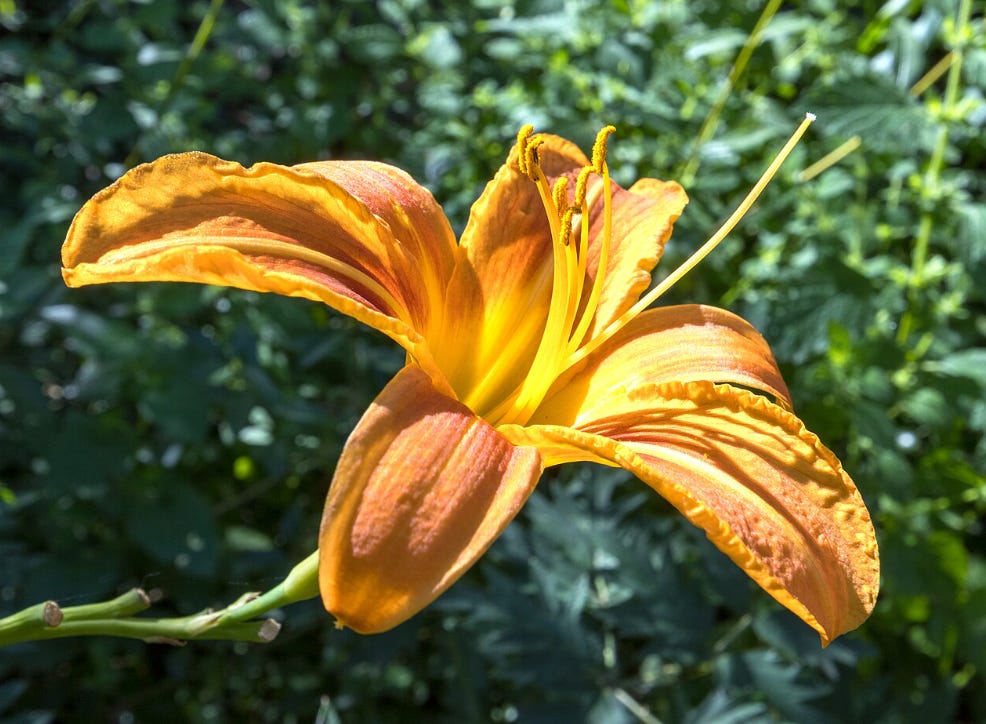
JackyM59, ‘Hémérocalle fauve (Hemerocallis fulva) en juin à Monchecourt’ (2026), via Wikipedia
~
Thanks for reading!
The WM tiny team 🎶
I agree, Susan, this is flower I am sentimental about, and so this poem captivates me.